In short
- A project ends at delivery; a programme ends when the benefit has landed.
- The programme manager owns what sits between projects: joins, shared people and trade-offs.
- Changes made inside one project often move another, so they need a programme-level route.
The steering committee goes round the table. Eight project managers report in turn: two green, five amber, one red with a recovery plan. Each answer is clear and each is defended well. Then the sponsor asks the question the meeting exists for: will the programme deliver the reduction in processing time it promised this year?
The programme manager starts to answer, and realises the answer is not in any of the eight reports. Each project manager answered for their project. The benefit was never any one project's job. Nor was the dependency between the new case system and the retraining, or the fact that the same three data engineers appear in four plans.
The programme manager in that room had been running a large project. The job asked for something different.
What goes wrong
Programme management and project management are often treated as the same discipline at different sizes. A good project manager is promoted, given more projects, and keeps doing what made them good: a tighter plan, a cleaner report, more control over scope. The programme grows, and the questions it exists to answer have no owner.
The difference is in what each one is accountable for. A project delivers an output: a system, a building, a new process, on agreed scope, time and cost. It ends when the output is handed over. A programme exists for an outcome: a benefit the outputs are meant to produce together, such as faster service, lower cost or a new revenue line. It ends when that outcome has landed, which is usually after several of its projects have closed.
| Project management | Programme management | |
|---|---|---|
| Accountable for | An output, on scope, time and cost | An outcome, and the benefit it brings |
| Ends when | The output is handed over | The benefit has been realised |
| Manages | Tasks and activities inside one plan | The joins between plans, shared people and money |
| Main decision | How to deliver what was agreed | Which project gives way when two cannot both win |
| Typical failure | Late or over budget | Every project delivered, and no benefit |
When a programme is run as a large project, four things fall between the reports.
The benefit belongs to nobody. Each project closes on delivery, and the benefit is due months later. By then the project teams have moved on and nobody is measuring it. I wrote about that gap in delivered, and no benefit.
The joins belong to nobody. The link between the case system and the retraining is not inside either plan. Each project manager assumes the other will tell them about a slip. When one slips, the other finds out at their own milestone.
Shared people are booked twice. Each plan assigns the data engineers at a sensible load. Across four plans they are well over their capacity, and no single report shows it. When one project slips, their assignments stretch into weeks already promised to another.
Trade-offs are made locally. Each project manager, rightly, protects their own dates and scope. When two projects need the same people in the same month, the decision gets made by whoever asks first, and the programme's priorities never enter it.
What good looks like
Good programme management takes ownership of everything that sits between the projects. Five moves.
Write the outcome as benefits with owners
List the benefits the programme exists for, each with a target, a date, a measure the business already reports, and a named owner who stays accountable after the projects close. Then link each project to the benefits it contributes to. The programme's status becomes a question about benefits as well as delivery.
Own the joins between projects
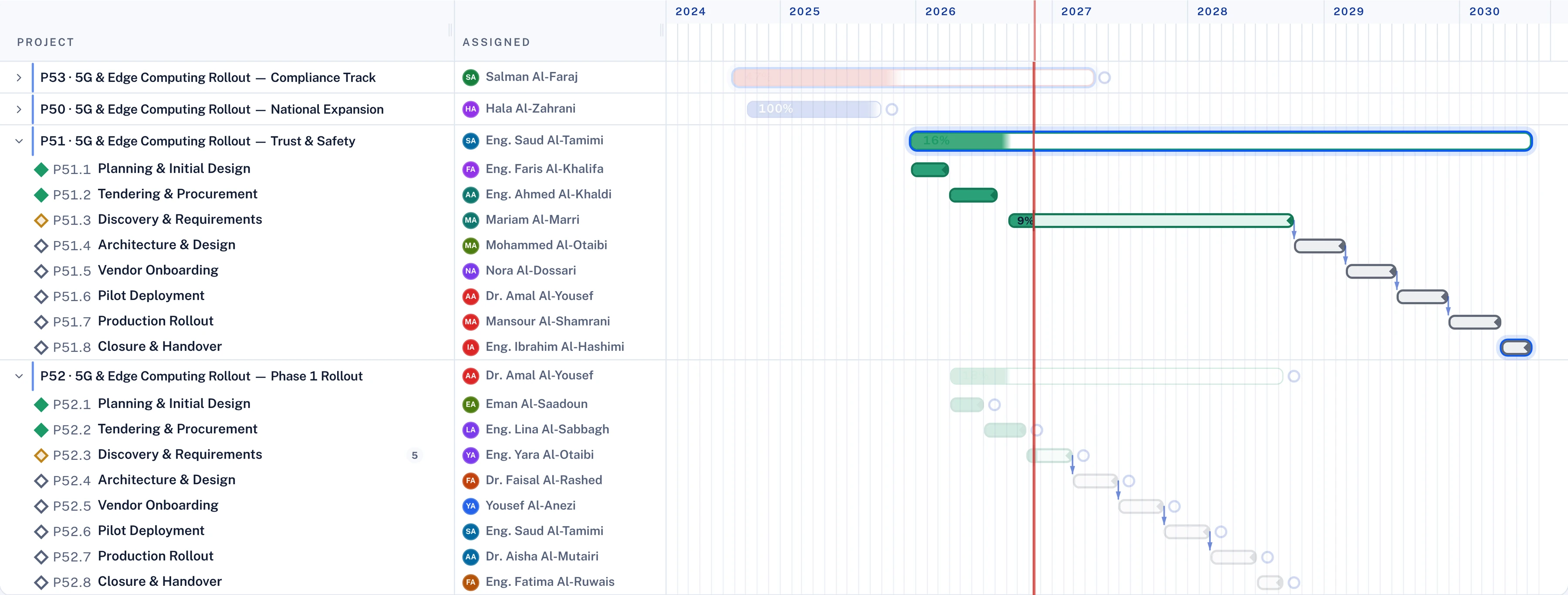
Record every dependency between projects as a link both owners have agreed. A project manager who needs something from another project proposes the link, and the other project's owner accepts it into their plan. With the joins recorded, the programme has a critical path across projects, and a slip in one plan moves the dates in the others on the day it happens. More on this in dependencies are the programme.
Hold the shared people at programme level
Keep one view of capacity across every plan, by team and by month. Before a date moves, check whose assignments it stretches and whether that pushes anyone past their capacity on other projects. The cost of a slip is often paid by a different project from the one that slipped.
Give trade-offs a programme route
When two projects cannot both have what they need, the programme manager puts the choice to the people who own the priorities, with the cost of each option in days and money. A change request inside one project that moves another goes on a route where the affected owners see it before it is approved.
Keep the programme open until the benefit lands
Close projects when their outputs are accepted. Keep the programme, or at least its benefits, open until the outcome has been measured against the baseline. This is what separates strategic programme management from a well-run collection of projects.
In Lodestar, a dependency on a project you do not manage is sent to that project's owner to approve, and the recorded links between projects give the programme its critical path. The delay simulator shows what a slip does to the end date, which work downstream moves, and who is pushed above 110% load on other projects. Project managers and the programme manager work in the same model, so a project update is entered once and rolls up to the programme and its benefits without a second report.
Questions for your next review
- For each benefit this programme promised, who owns it after the projects that deliver it have closed?
- Which dependencies between our projects are recorded and agreed by both owners, and which are assumed?
- Who in the programme is booked above capacity across all the plans they appear in?
- When two projects last needed the same people in the same month, who decided, and on what basis?
Project management makes each plan deliver. Programme management makes the plans add up to the outcome someone paid for, and that work lives between the projects.

Hany is a strategy and transformation executive with a technical background in software and AI. He has advised C-suites at a top-three strategy consulting firm (MBB) and independently, and has run transformation programmes of more than USD 1 billion.
Connect on LinkedIn