A real scheduling engine under every view your teams like
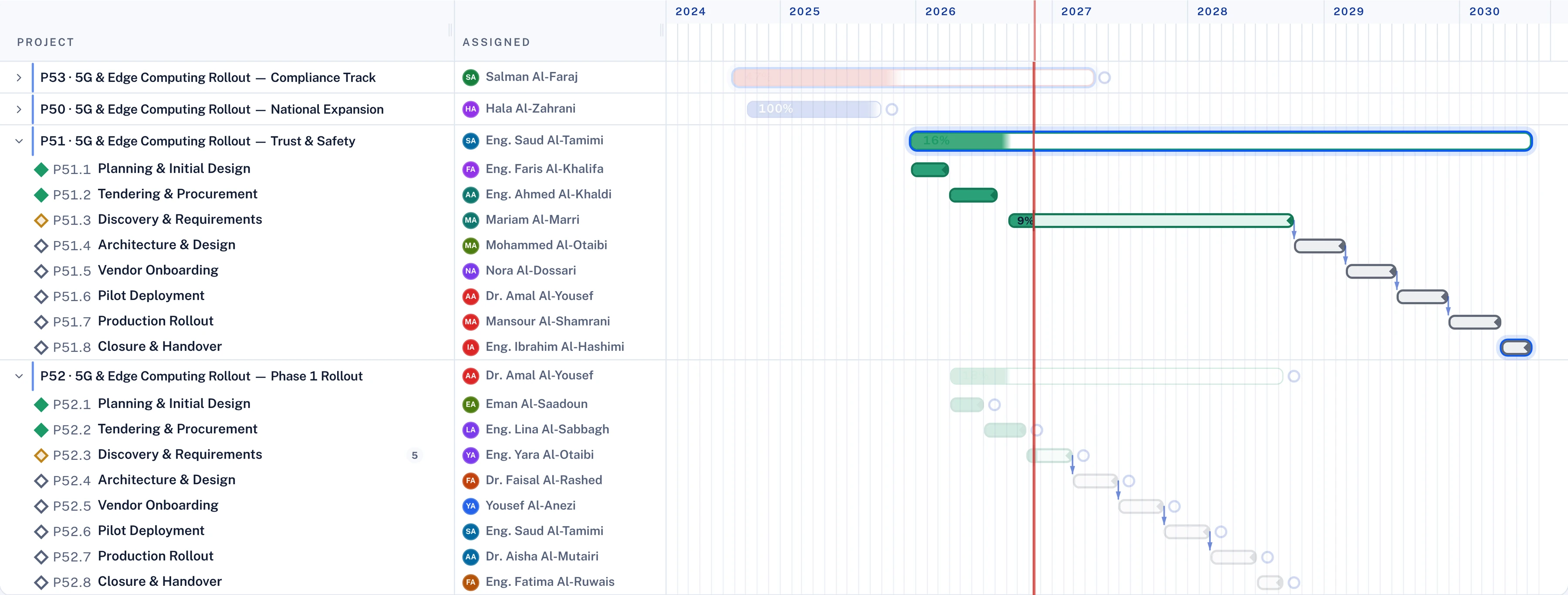
Gantt, board, cards and calendar are views of the same activities, with float, knock-on effects and baseline control underneath. Move a card and the schedule moves. Move a date and the platform tells you what it costs.
How it works
For the PMO running the schedule, the register and the gates across the whole estate.
One schedule, four ways to work it
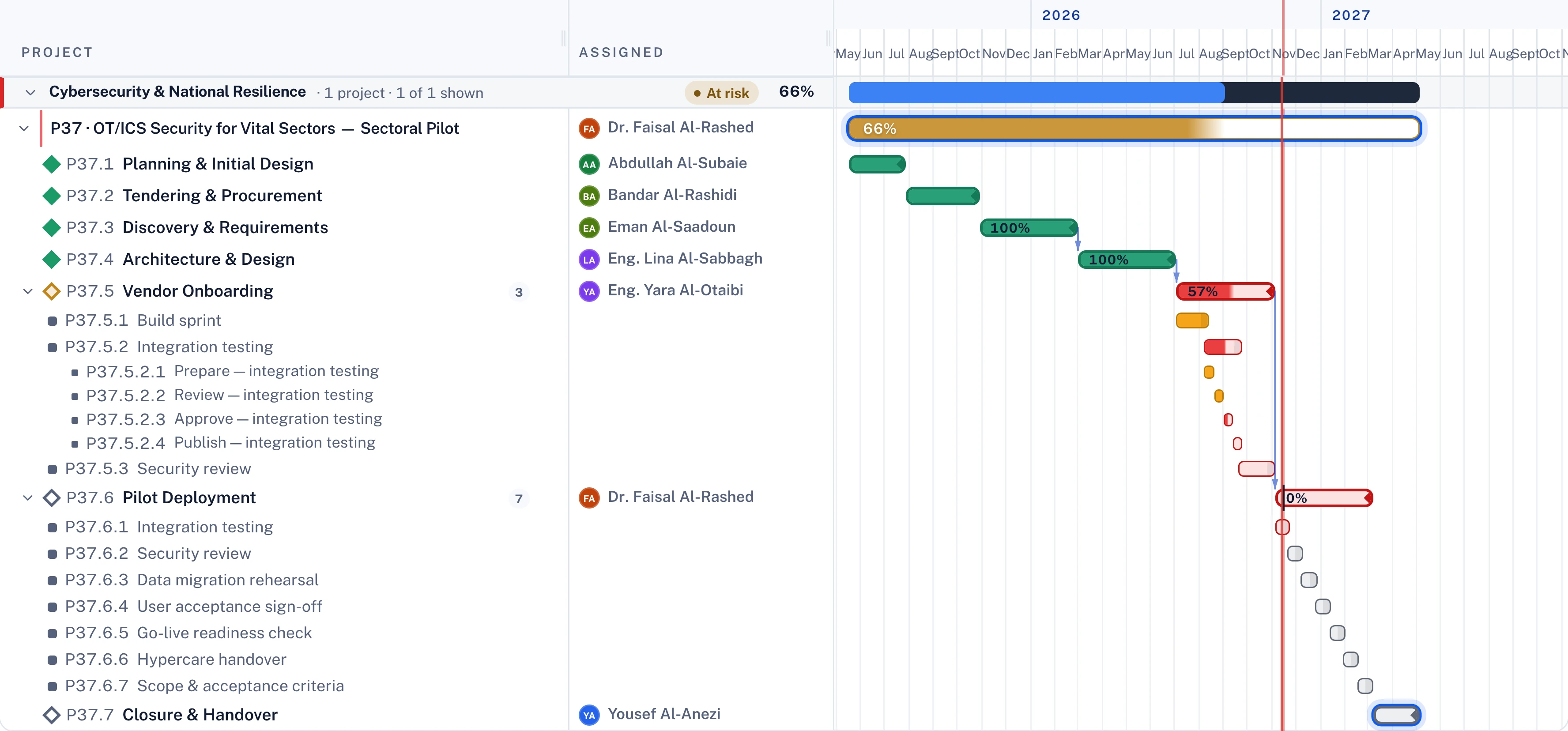
Planners get a critical-path Gantt, delivery teams get a board, executives get the roll-up, and all of them write to the same activities, so nothing is entered twice.
- Float, lag, dependencies and baseline variance on every activity
- Card moves and status changes write straight to the plan
- Milestones, chains and knock-on effects recomputed continuously
Gates that cannot be talked past
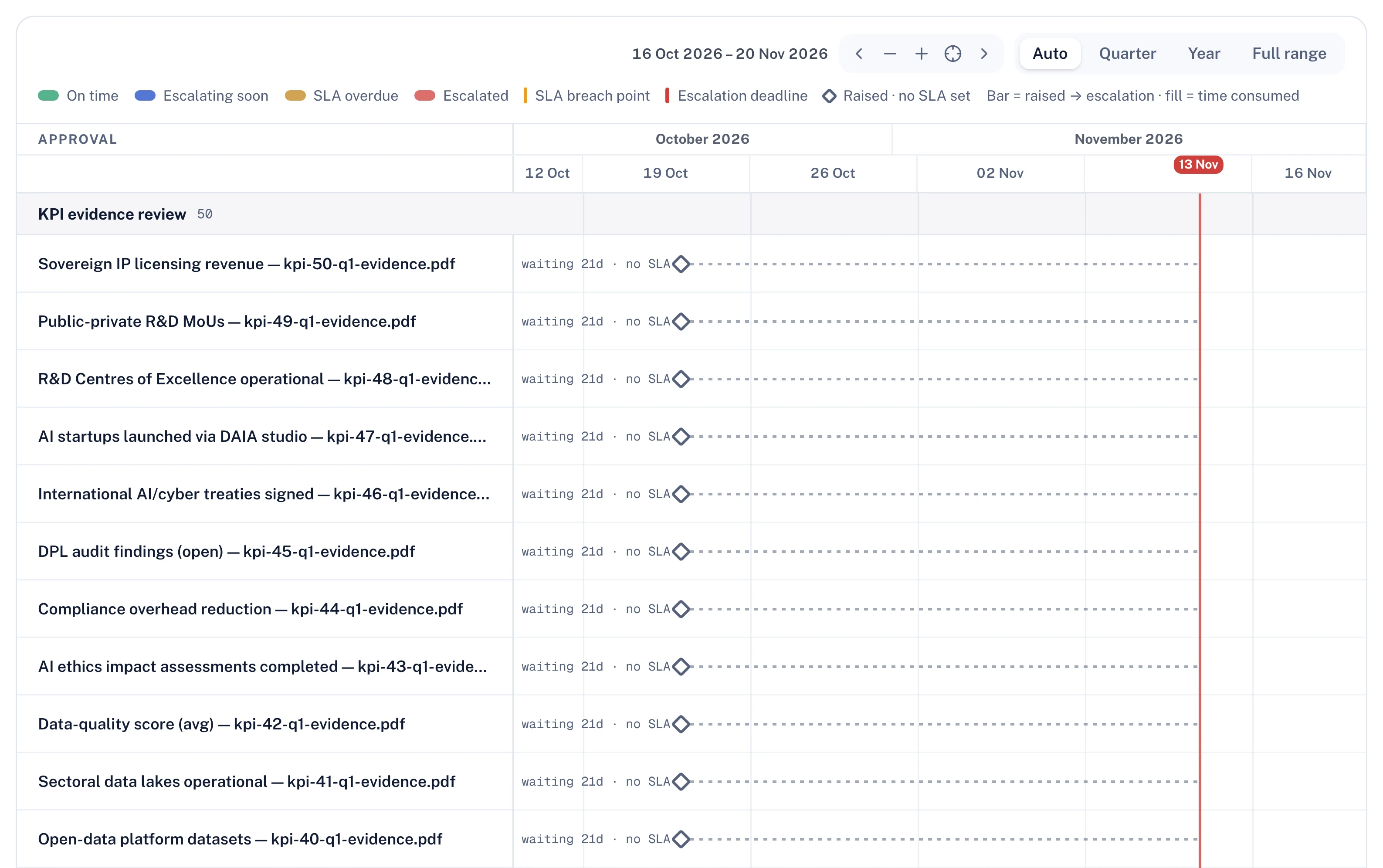
Every stage gate carries its named approver, the evidence it needs and a deadline. Unanswered approvals escalate on their own.
- No-code gate design per project type
- Evidence checklist enforced before a gate can pass
- Automatic escalation to the next forum after the deadline
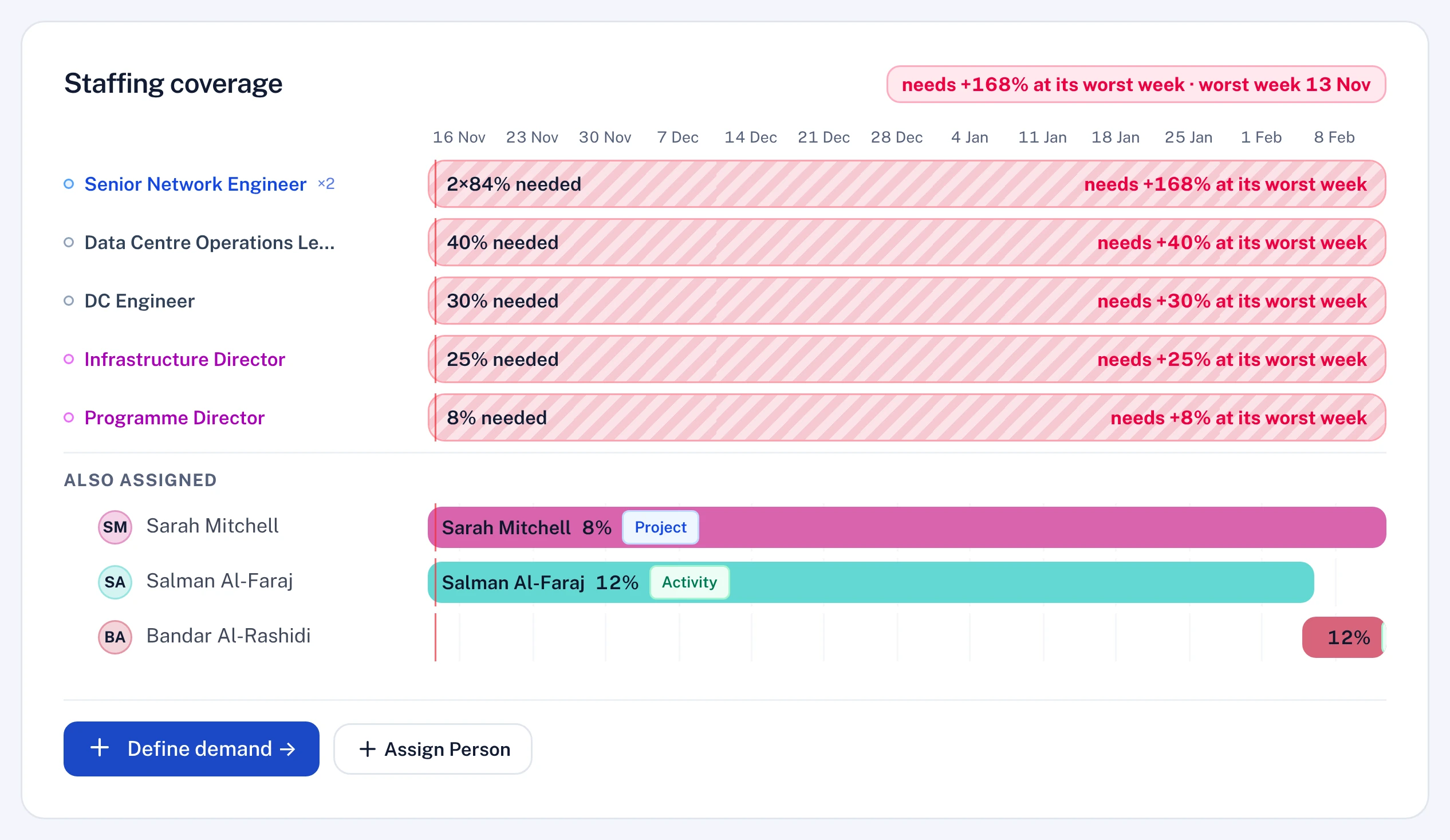
Overload shows on the peak week, not in an average
Capacity is modelled per person per month, so one systems lead on three critical paths is visible before a date slips because of them.
- Supply against demand by team, role and stream
- Key-person risk and single points of failure named
- The cost of filling each gap, priced from the role model
The PMO toolkit
Every item below runs on the same engines the screens use, so the numbers never diverge.
Real float, lag and dependency maths, not a picture shaped like a Gantt.
Every view writes to the same activities, with no re-entry and no drift.
Frozen baselines with variance, and a governed route to re-baseline.
No-code gates with named approvers, evidence and automatic escalation.
Capacity against demand per person and month, with the cost to fill.
One moved date priced across the portfolio in days of impact.