A strategy execution platform, governed from the board's targets to this week's tasks
Lodestar is a governed, AI-native strategy execution platform. The strategy, its KPIs, the portfolio, the schedule, the budget, the people, the risks and the approvals sit in one model, so every reported number traces back to the work and the evidence behind it.
What strategy execution platform is
A strategy execution platform turns a strategy into funded initiatives, projects and KPIs, tracks whether the work is moving the targets, and gives leaders what they need to decide when it is not. It joins what is often split between strategy tools, project tools, spreadsheets and slide decks.
How Lodestar does it
Enterprise-grade and tailored with you to your operating model and procedures. One model underneath every view.
One model from strategy to task
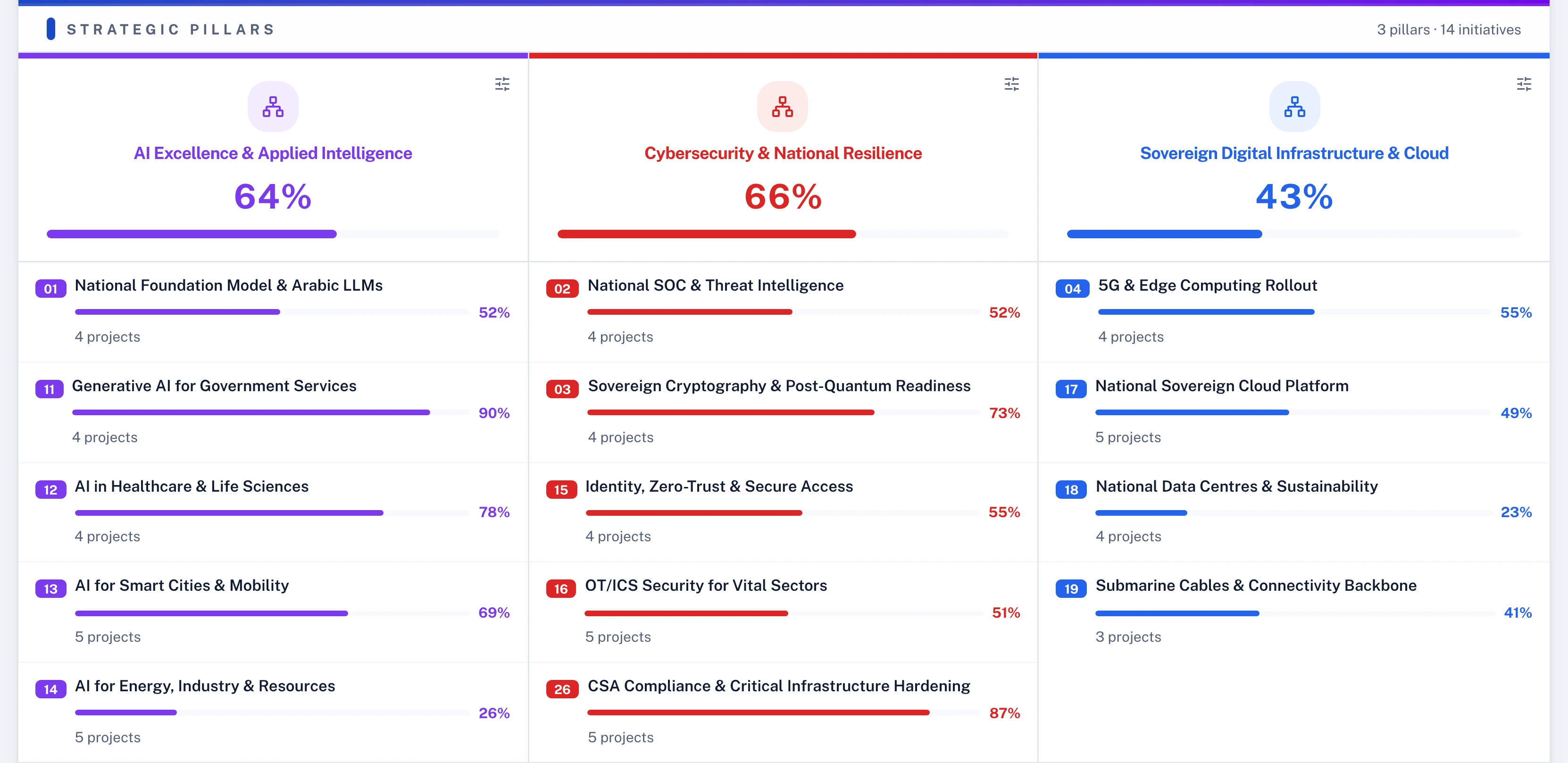
Pillars, initiatives, projects, activities and tasks sit with the KPIs they serve, the budget they spend and the people who deliver them. A slip, an overspend or a missed reading shows everywhere it matters on the same day.
- Strategy map and pillar roll-ups
- Projects tied to the KPIs they serve
- Work that serves no initiative, listed
Numbers backed by evidence
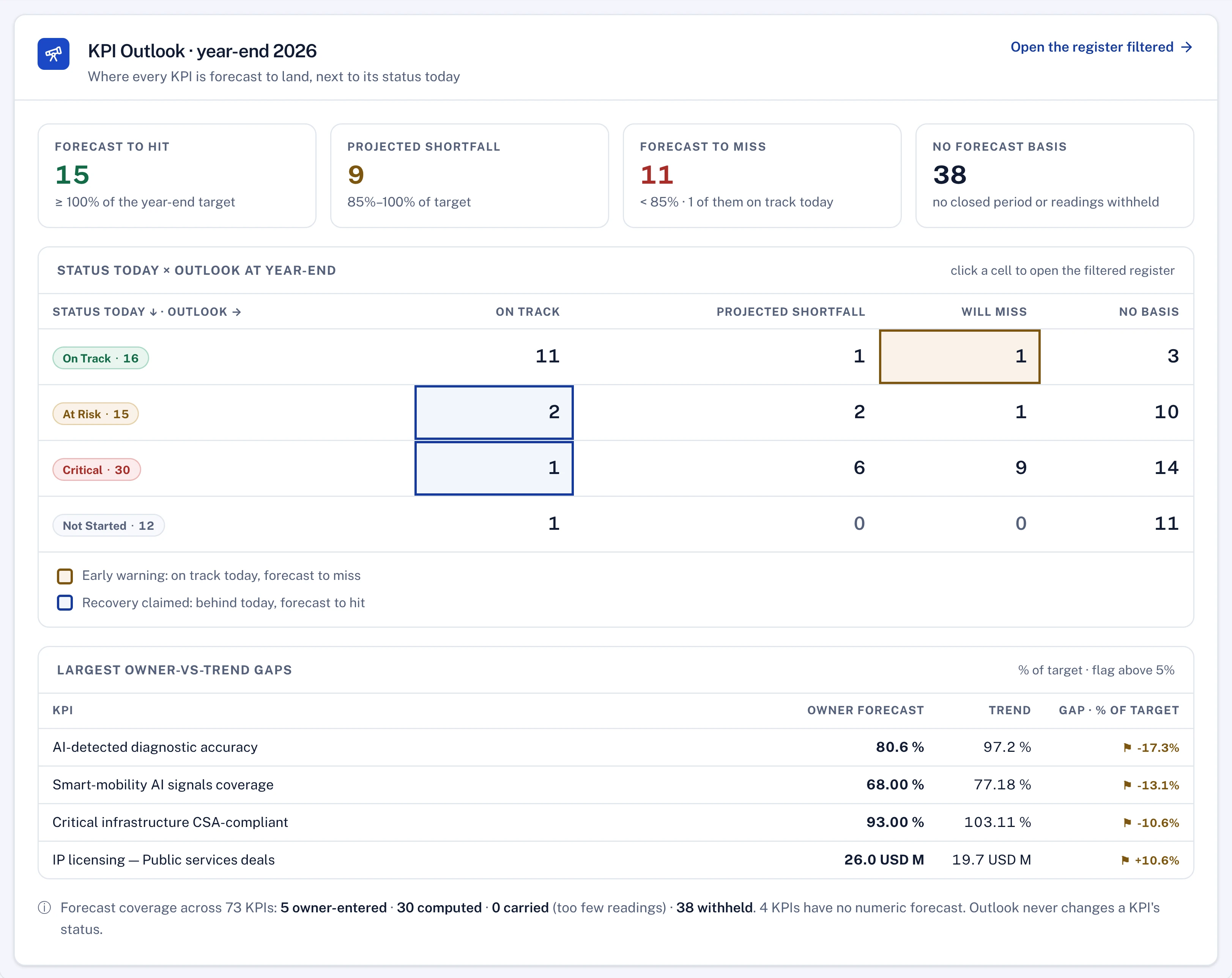
Progress and KPI readings count only once the right authority approves their evidence, so the dashboard reports what is proven rather than what was typed in.
- Evidence required before progress counts
- Polaris challenges the evidence for the approver
- A write-once record of every decision
Decisions, not just reports
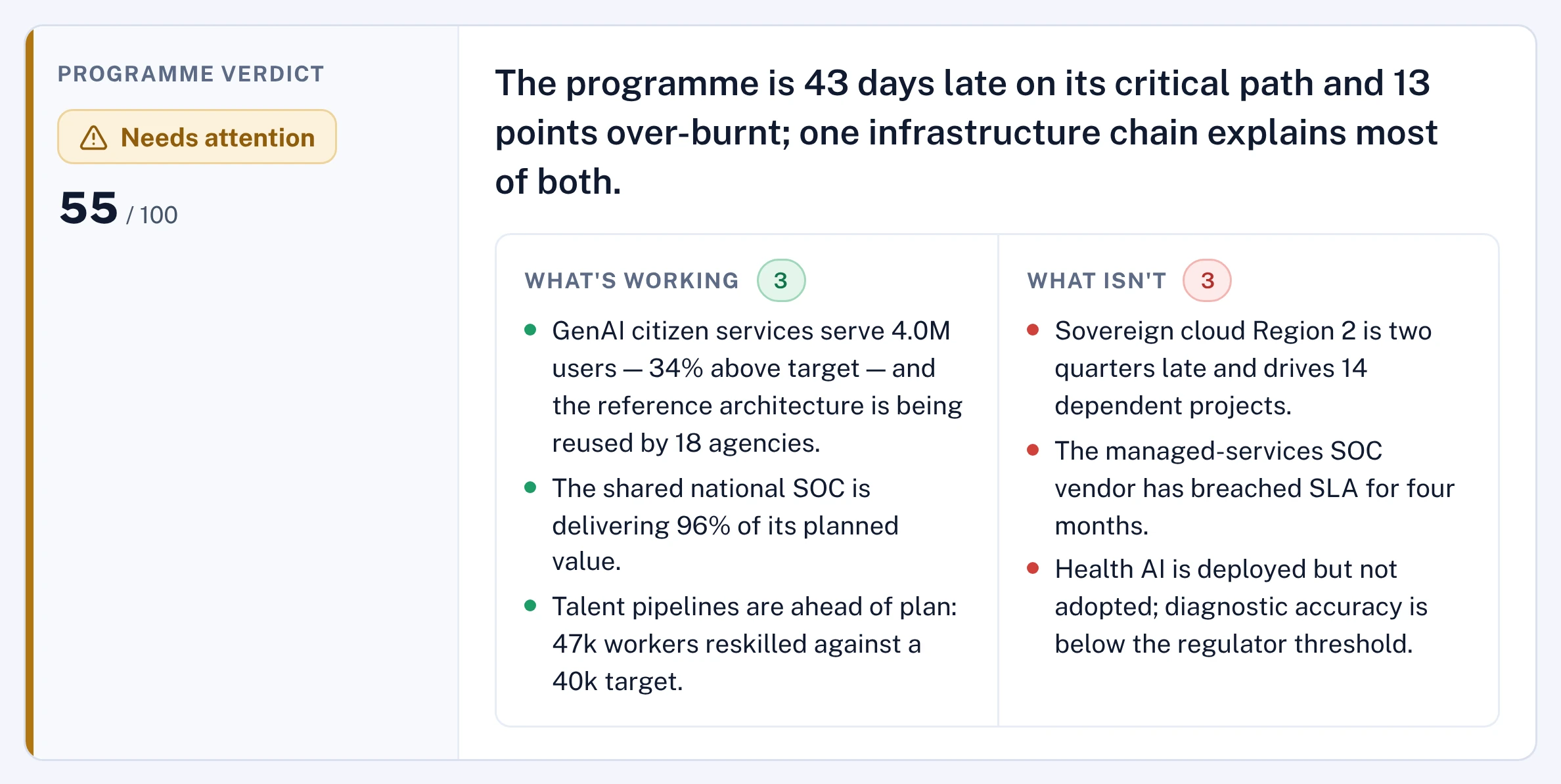
Seven Polaris advisors read the programme each cycle and a Chief of Staff reconciles them into one brief with the decisions that need you. A recommended move can be tested in a sandbox before anyone approves it.
- One-page Chief of Staff brief
- Ranked decisions with owners
- A person approves every change
What you get
Every item runs on the same model, so strategy, portfolio and delivery never disagree.
Strategy, KPIs, portfolio, schedule, budget, people and risk in one model.
Approval routes for 23 kinds of change, under your delegation of authority.
Progress counts once the right authority approves its evidence.
Polaris advisors and agents, inside each person's permissions.
Any cloud, any region, your data centre or air-gapped.
Full right-to-left interface and bilingual reports.
What is a strategy execution platform?
Software that connects a strategy to the initiatives, projects and KPIs that deliver it, tracks whether the work is moving the targets, and supports the decisions to correct course. Lodestar does this on one model from strategy to task.
How is it different from a strategy or OKR tool?
Strategy and OKR tools hold the goals. A strategy execution platform also holds the work, the money, the people and the approvals behind them, so it can show whether the goals are being delivered and why not.
Who uses Lodestar for strategy execution?
Strategy management offices, enterprise PMOs and transformation offices in enterprises and government entities, running large-scale and mid-size transformations.
Is Lodestar a self-serve tool?
No. Lodestar is enterprise-grade and tailored with each client to its operating model, delegation of authority and procedures, with a delivery lead and a solution architect.
From the blog
Dependencies are the programme: manage the joins between plans
Most programme slips start at a join between two plans that nobody owns. Declare dependencies at every level, make both sides agree the date, compute the critical path across projects, and price every slip before you accept it.
OKRs that pull the whole organisation one way
OKRs pull an organisation one way only while every team key result can be traced to a company key result, and every piece of work to the key result it should move. Keep the objectives few, measure outcomes, and draw the links before the quarter starts.
Why strategy stalls between the board pack and the work
A strategy reaches the work through three translations, each done once, by hand, in a different tool. Within months nobody can say which pillar a project serves. Keep one model, make every project name what it serves, and review the work that has no link.