Strategic portfolio management (SPM) software, governed from strategy to task
Lodestar is an enterprise-grade strategic portfolio management platform. It connects the strategy, its KPIs and the portfolio of initiatives and projects in one model, so the strategy office can see which investments move which targets, and decide on evidence.
What strategic portfolio management is
Strategic portfolio management decides which initiatives and projects the organisation should fund, sequence, pause or stop, so that the portfolio serves the strategy. It sits above project portfolio management (PPM), which runs the chosen projects well, and it needs the same numbers underneath both.
How Lodestar does it
Enterprise-grade and tailored with you to your operating model and procedures. One model underneath every view.
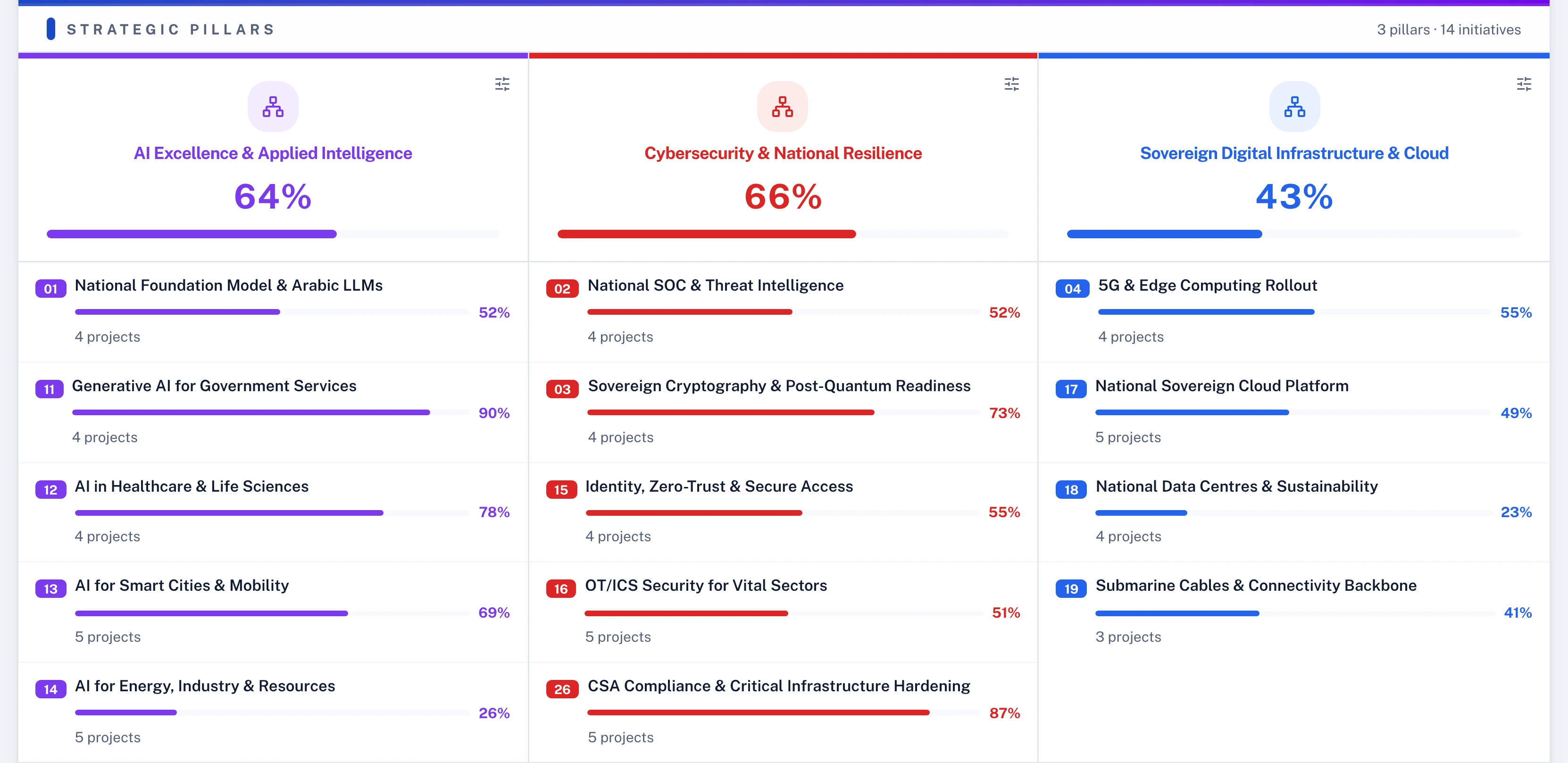
Every project tied to a pillar and a KPI
Pillars, initiatives, projects, activities and tasks sit in one model, with the KPIs they serve. Work that serves no initiative, and KPIs outside the cascade, are listed for the review.
- Strategy map and pillar roll-ups
- KPI cascade of up to five levels
- Orphaned projects and KPIs listed
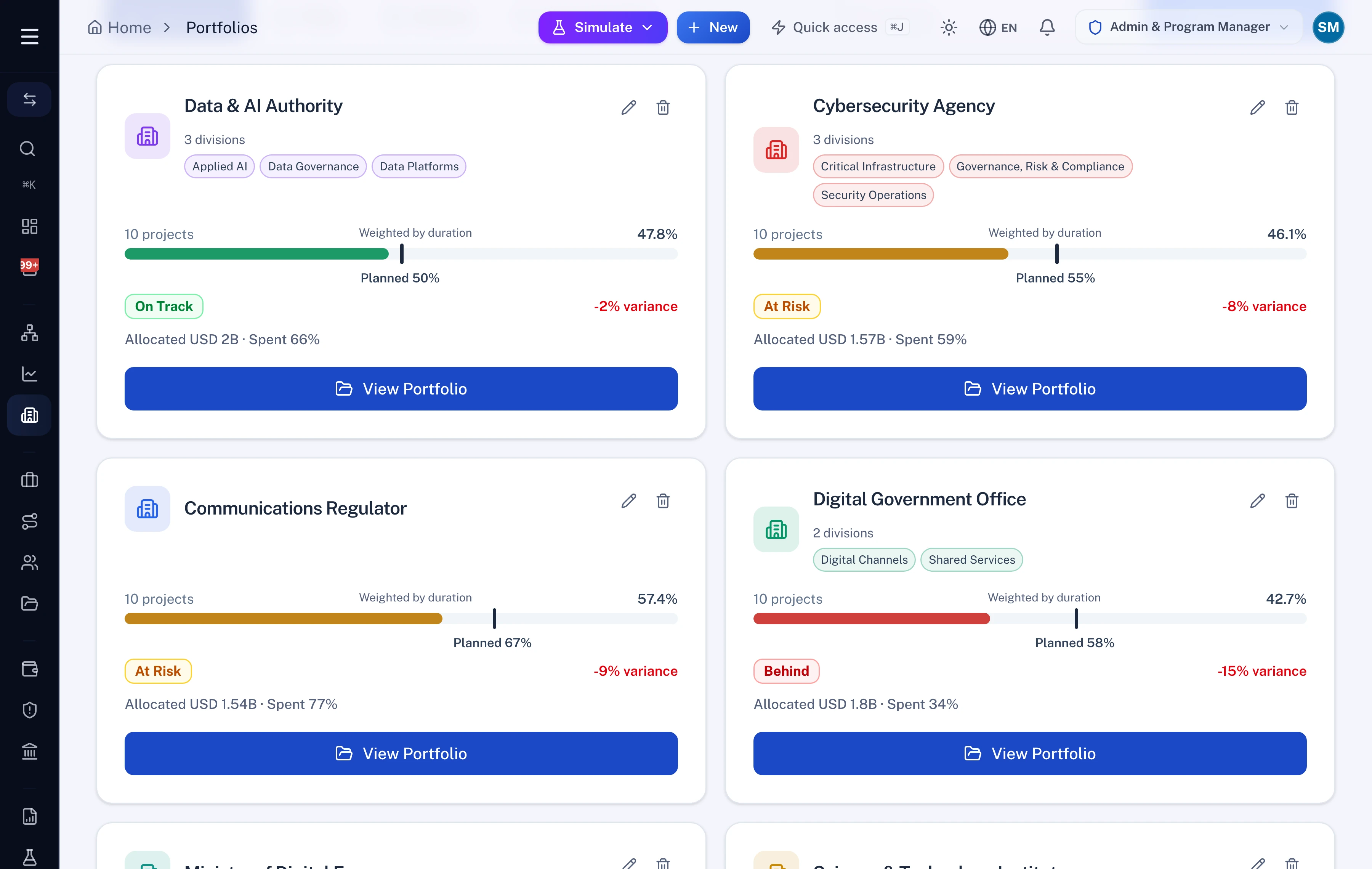
Portfolio choices on one scale
Every department and portfolio is shown on the same scale: progress against plan, variance, budget and status. The Chief of Staff brief ranks the moves that need a decision each cycle.
- Department and portfolio roll-ups
- Ranked decisions from Polaris
- Simulate a move before making it
Money, value and capacity together
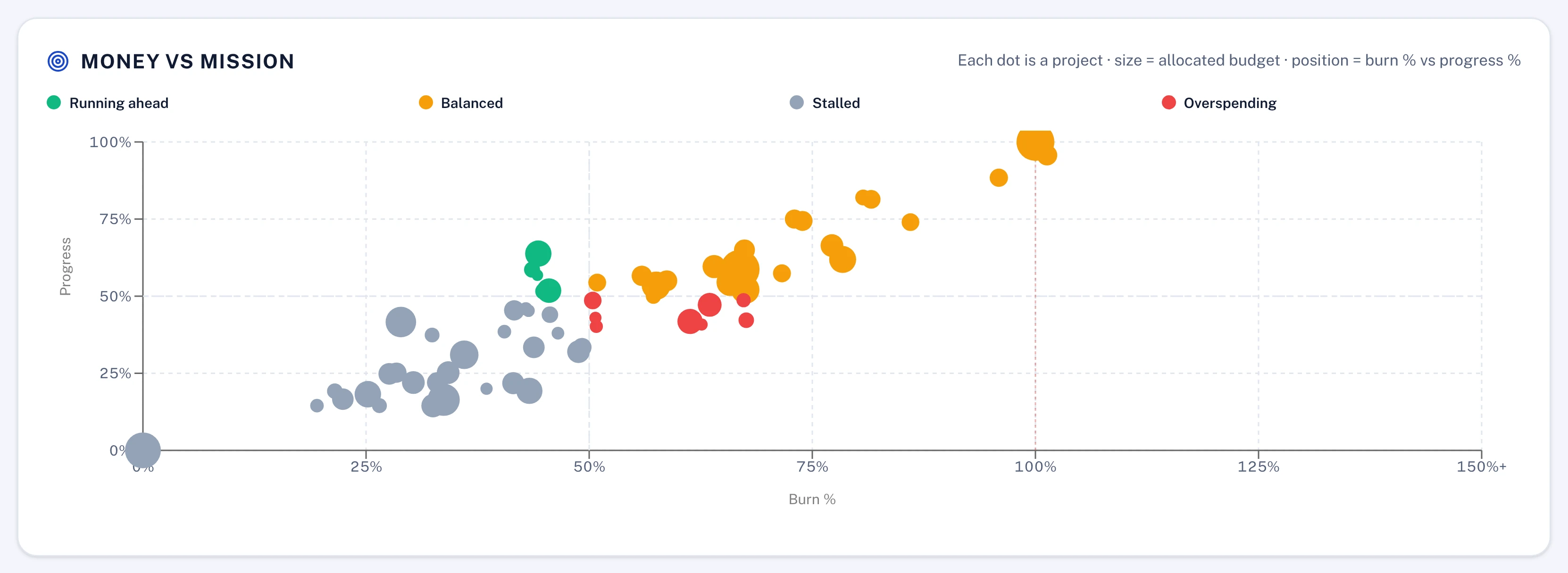
Budget, contracts, benefits and capacity sit beside progress, so a funding decision is made with burn, forecast value and the people it needs on one screen.
- Burn against progress
- Benefits register, planned against realised
- Capacity by team and month
What you get
Every item runs on the same model, so strategy, portfolio and delivery never disagree.
Strategy, KPIs, portfolio, schedule, budget, people and risk in one model.
Approval routes for 23 kinds of change, under your delegation of authority.
Progress counts once the right authority approves its evidence.
Test a portfolio move and see its knock-on effects before applying it.
Seven AI advisors and a Chief of Staff brief, with a person approving.
Single sign-on, role-based access, Arabic and English, ERP and Teams.
What is strategic portfolio management software?
Software that helps an organisation choose, fund and steer the initiatives and projects that deliver its strategy, and show whether the strategy is moving. Lodestar does this on one model from strategy to task, with KPIs, money, people and risk on the same records.
How is SPM different from PPM?
Project portfolio management runs the projects well: schedules, resources and cost across the portfolio. Strategic portfolio management decides which projects deserve to be in the portfolio and whether together they move the strategy. Lodestar covers both on one model, so the two never disagree.
Is Lodestar a self-serve tool?
No. Lodestar is enterprise-grade and tailored with each client to its operating model, delegation of authority and procedures, with a delivery lead and a solution architect.
Who uses Lodestar for SPM?
Strategy management offices, enterprise PMOs and transformation offices in enterprises and government entities, running large-scale and mid-size transformations.
From the blog
Approved against people who are already booked
Much of what is called change fatigue is a capacity problem: portfolios are approved against money while the same teams and experts are booked past what they can carry. Approve against capacity by team and month, sequence instead of stacking, and treat each start as a decision.
The project nobody will stop: write the exit at the entry
A portfolio that only ever adds work starves its best projects. Write the conditions for stopping on the day a project is approved, judge each review by how much money and how many people move, and make a stop a decision with a route, an approver and a record.
Portfolio reviews that decide something
A portfolio review that gives every project equal time informs the room and decides nothing. Put every project on one scale, take the exceptions first, state the decision wanted before the meeting, and record each decision with an owner and a date.