Where a slipped date and an unclassified commitment both cost real money
Capital delivery needs the money and the schedule in one model. Lodestar carries budget, secured, committed, actual, forecast and variance at ledger level, and turns earned value into an early warning instead of a month-end surprise.
How it works
For capital delivery, where a slipped date and an unclassified commitment both cost real money.
Six numbers, one truth, no spreadsheet in between
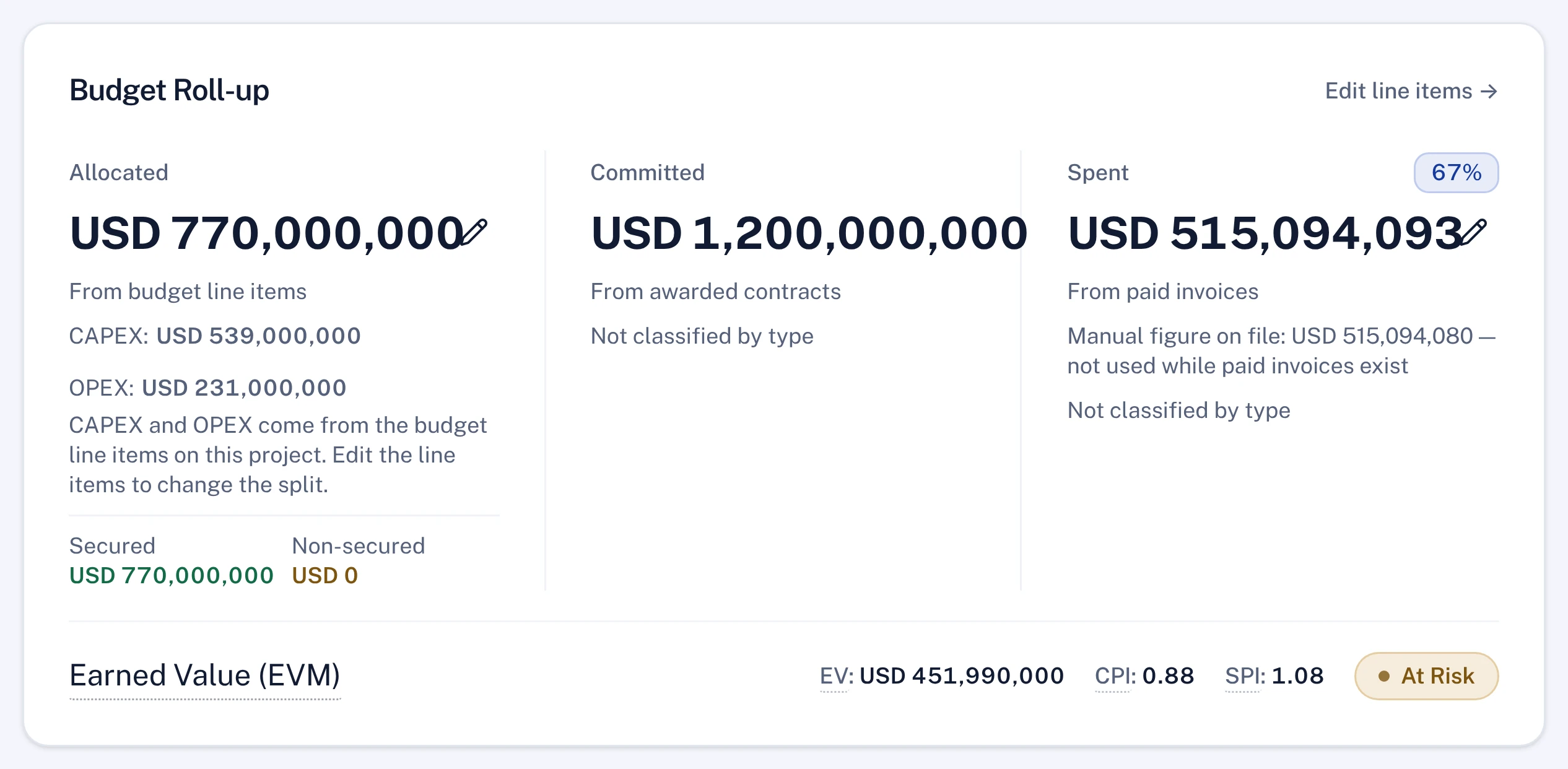
Budget, secured, committed, actual, forecast and variance live on the same record as the schedule, so a commitment without a classification, or spend ahead of progress, is caught as soon as it happens.
- Ledger-level actuals from the finance system, not retyped
- Unclassified allocations and leakage risk flagged on sight
- Forecast final recomputed as the plan changes
Earned value as an alarm, not a report
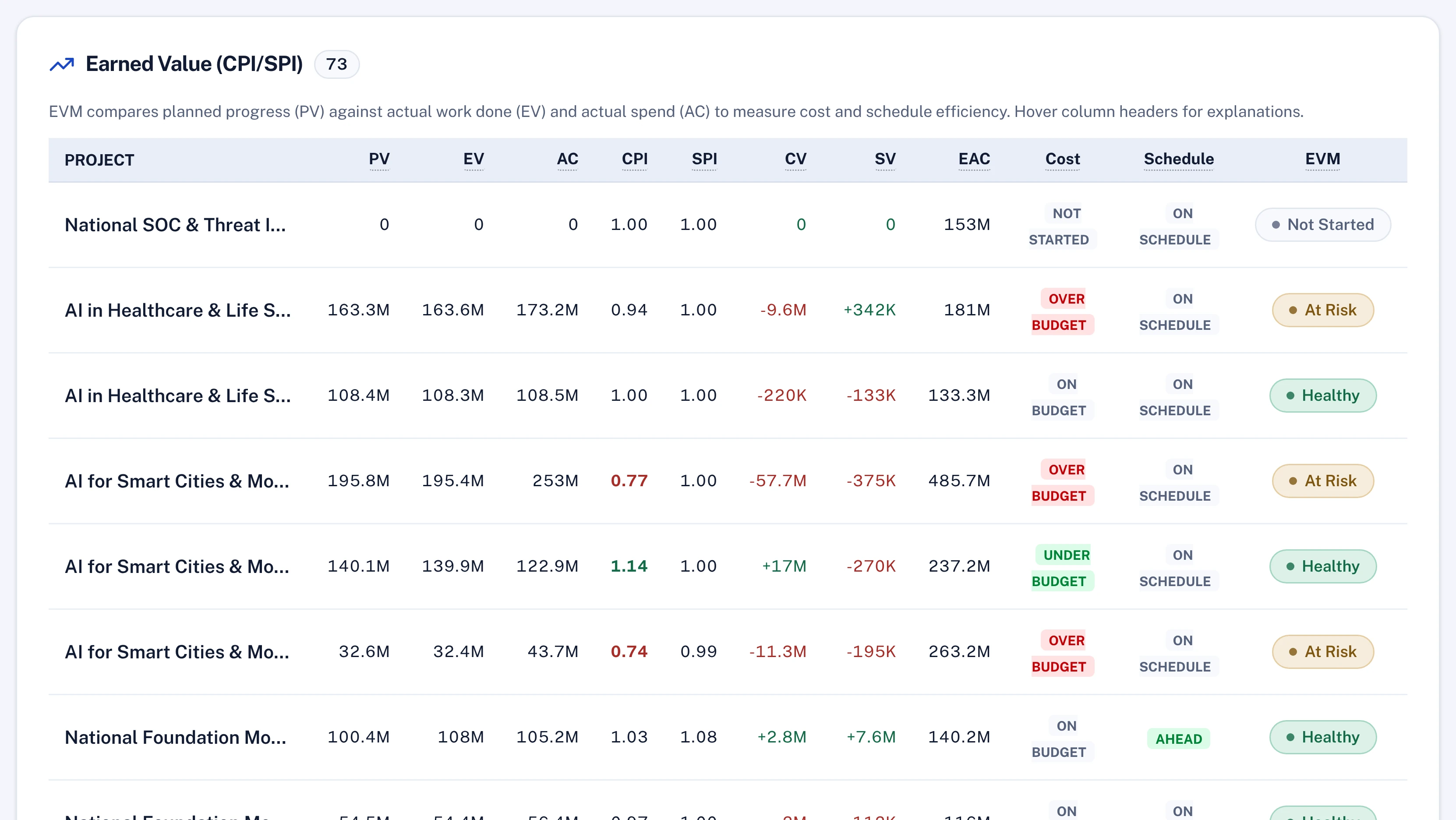
CPI and SPI are computed per project and rolled up, so the programme knows which packages are buying progress and which are only spending.
- EV, CPI, SPI and EAC per project and per pillar
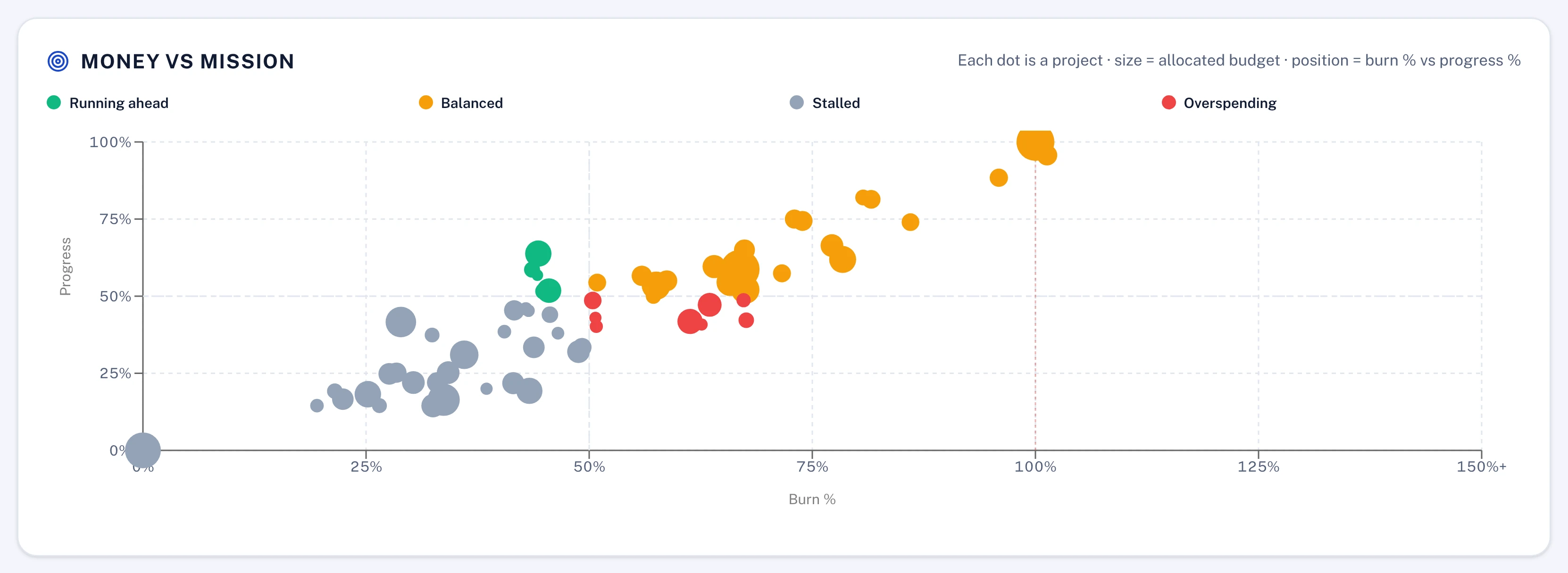
- Burn running ahead of progress flagged as its own condition
- A breach projected weeks before it lands
One moved date, priced across the whole portfolio
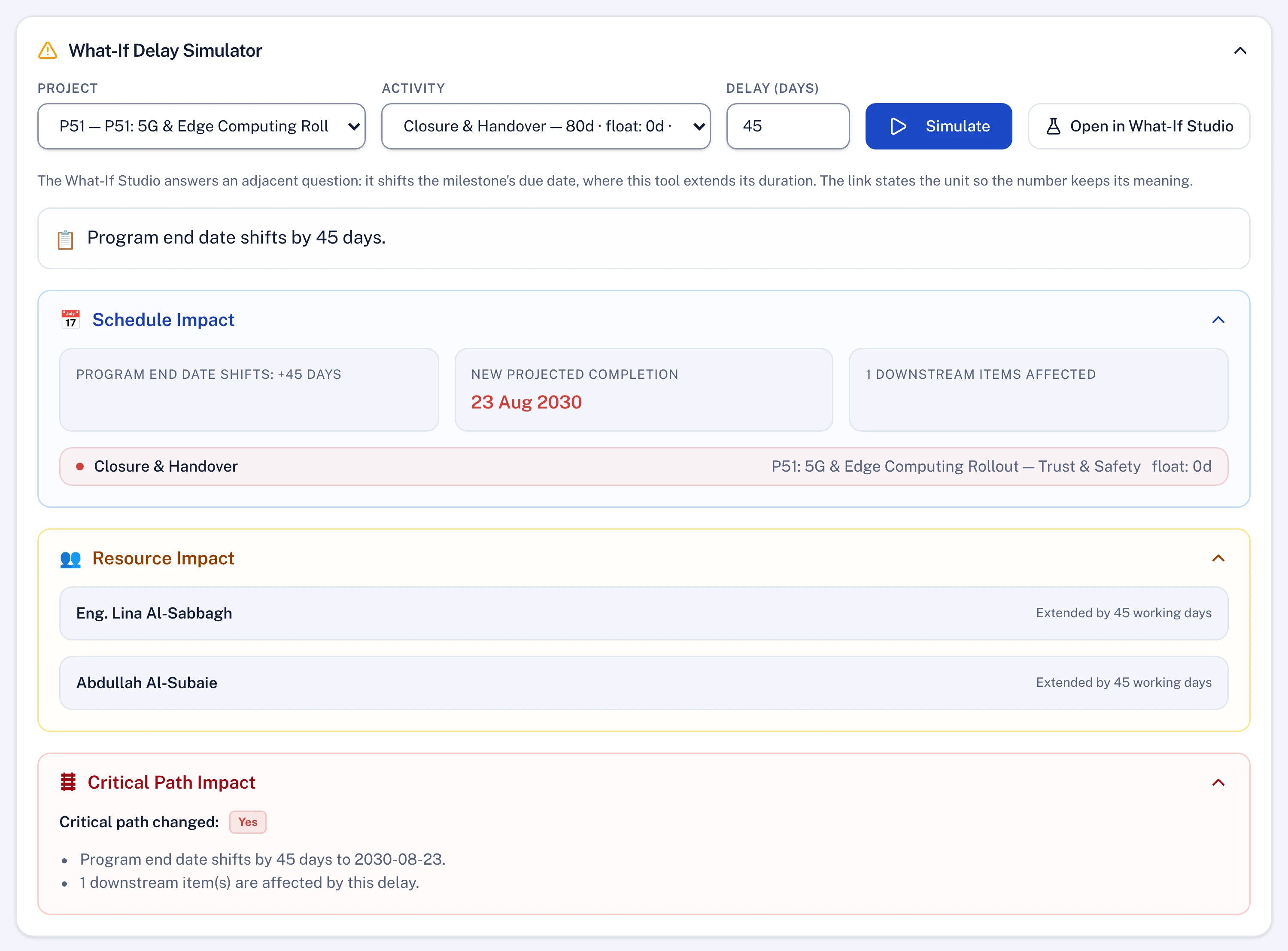
When a date moves, the engine simulates the ripple, including the undeclared dependencies Polaris finds, and prices it in days of end-date impact and cost.
- Second-order effects computed by the engine
- Undeclared links surfaced and proposed for confirmation
- The committee pack shows the costed consequence
The capital delivery toolkit
Every item below runs on the same engines the screens use, so the numbers never diverge.
Budget, secured, committed, actual, forecast and variance on one record.
CPI, SPI and EAC computed per project and rolled up.
Forecast final recomputed as dates and commitments change.
Undeclared links found and priced in days of end-date impact.
Test a drawdown in a sandbox before anyone signs for it.
Unclassified allocations and invoices without a match, flagged.